Why Is MRI Needed After CT Scan? A Complete Guide for Patients
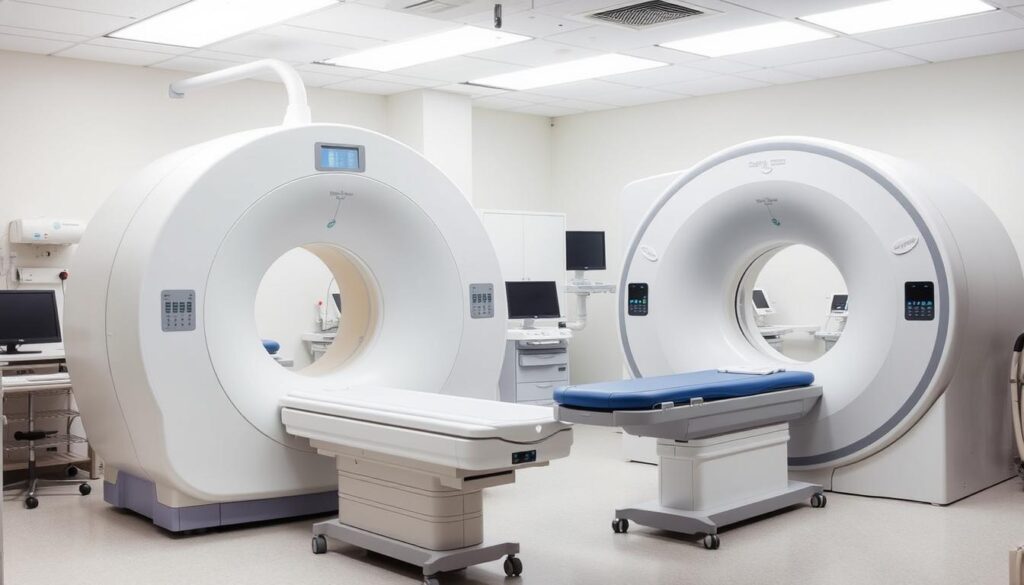
If your doctor has recommended an MRI after CT scan, it’s completely normal to feel a little unsure. Many patients wonder, “Why would a doctor order an MRI after a CT scan?” or “Is something serious being missed?”
In modern diagnostic medicine, ordering an MRI after a CT scan is a common, clinically appropriate practice. At Dubai Medical Diagnostic Centre (DMDC), advanced imaging isn’t just about capturing images; it’s about ensuring accurate, timely diagnoses that guide the right treatment.
This guide explains why MRI after CT scan may be recommended, what MRI can show that CT may not, and how you can prepare for your appointment with confidence.
MRI vs CT Scan - Two different tools. Two different strengths
Before understanding why is MRI needed after CT scan, it’s important to know what each scan does individually.
What does a CT scan do? | What does an MRI scan do? |
A CT (Computed Tomography) scan uses a series of X-ray beams to build detailed 3D cross-sectional images. It is exceptionally fast. A CT scan is best suited for:
| An MRI (Magnetic Resonance Imaging) scan uses powerful magnetic fields and radio frequency pulses to produce images. No radiation, provides superior detailing. MRI excels in imaging:
|
👉 Quick takeaway CT = fast overview MRI = detailed soft tissue clarity Used together = more accurate diagnosis |
Why MRI after CT scan? The 6 most common reasons
So why would a doctor order an MRI after a CT scan? The answer usually comes down to one thing: the CT scan found something, but not enough to act on, or it couldn’t see certain structures clearly enough to be sure.
1. To get more detailed soft tissue information
CT is excellent at identifying many structural problems quickly, but MRI provides richer detail of soft tissues. CT scans may identify a problem, but an MRI helps define it more clearly.
- Brain abnormalities (tumors, inflammation)
- Spinal cord or nerve issues
- Muscle and ligament injuries
- Some inflammatory conditions
This is one of the most common reasons to recommend an MRI after a CT scan.
2. To clarify uncertain findings
Sometimes a CT scan shows something “possible,” “indeterminate,” or not fully explained. In those cases, doctors may use MRI to determine:
- Whether an abnormality is truly present
- How extensive it is
- What tissue type it may represent (information, MRI is often better at distinguishing)
3. To better evaluate certain brain and neurologic conditions
Neurologic imaging often benefits from MRI because it can highlight differences in tissues that relate to inflammation, injury, and many neurologic disorders.
If your symptoms include:
- Persistent headaches
- Neurologic deficits (such as weakness, numbness, or coordination issues)
- Concerns raised by a CT scan
4. To assess spinal problems beyond bone and alignment
CT can show bone alignment and obvious structural issues. But MRI can evaluate discs, nerves, spinal cord, and soft tissue structures, which are frequently the real drivers of symptoms like pain, tingling, or weakness.
5. To monitor or confirm a diagnosis
Doctors may use MRI to:
- Confirm findings seen on CT
- Track disease progression
- Evaluate response to treatment
This is another reason why would a doctor order an MRI after a CT scan, especially in ongoing care.
6. To avoid repeated radiation exposure
An MRI can provide enough detail to confirm a diagnosis without invasive testing.
- Reduces the need for biopsies in some cases
- Helps doctors plan treatment more accurately
So if you’re wondering why an MRI is after a CT scan, it’s often to ensure safe, informed decision-making.
Is it normal to have both scans? Absolutely
Why Is MRI Needed After CT Scan? Why is one scan not enough? The reality is that CT and MRI Scan are not competitors but complementary.
A few everyday scenarios where MRI after CT scan is a standard clinical practice
Head injury | CT for fast bleed assessment → MRI for detailed brain tissue evaluation |
Abdominal pain with a CT finding | MRI for precise organ and soft tissue characterization |
Back pain | CT to rule out fracture → MRI to assess disc, nerve, and cord involvement |
Oncology | CT for tumor detection → MRI for detailed staging and treatment planning |

When should you expect an MRI after a CT scan?
Not every CT scan requires a MRI follow-up. But, doctor may recommended MRI after a CT scan in the following cases.
- Symptoms persist despite normal CT results
- There’s a need for more detailed imaging
- The condition involves soft tissues or the nervous system
How to prepare for your MRI appointment?
To make your visit smoother, here are practical steps most patients can follow:
- Bring your CT images/reports if you have them (or ensure your doctor has sent the information).
- Wear comfortable clothing and remove metal items (jewelry, watches).
- Follow fasting instructions only if your clinician advises it (some contrast plans may require it).
If you’re at DMDC Dubai, your imaging team can guide you through preparation so you feel supported before you even step into the scanner area.
When would a doctor NOT recommend MRI after a CT?
Not every CT scan needs to be followed by an MRI. Your doctor may not recommend an MRI after CT scan if:
- The CT scan provided all the information needed for a clear diagnosis
- The findings were normal or minor and don’t require further investigation
- You have a pacemaker, certain metal implants, or other MRI contraindications
- A different follow-up test (like ultrasound or a PET scan) is more appropriate
Always discuss your specific situation with your referring physician.
Why choose DMDC for advanced imaging? Get accurate & fast answers.
At Deira City Medical Diagnostic Center (DMDC), Dubai’s pioneering diagnostic center trusted for over 25 years, you get the clarity you need quickly and accurately.
Whether you’ve been referred for an MRI after a CT scan or you’re starting your diagnostic journey for the first time, DMDC offers:
✅ Open MRI – wide, comfortable design that reduces patient anxiety
✅ AI-powered Siemens CT Scanner – one of Dubai’s most advanced CT scan
✅ Reports in 1 hour for MRI and CT scans
✅ Expert supervision by specialist radiologists with 35+ years of experience
Final Takeaway: Why MRI After CT Scan?
If you’re wondering why is MRI needed after CT scan, the simple answer is: CT and MRI complement each other. CT often gives a fast initial overview, while MRI can provide the soft-tissue detail and clarification doctors need for accurate next-step decisions.
Ready for your clarity after CT scan? Book your MRI appointment at DMDC Dubai today.
FAQ's
Does “MRI after CT scan” mean the CT found something serious?
Not always. Sometimes the CT result is inconclusive, or symptoms require a closer look. MRI after CT scan is often the next step for clarity, not only a response to emergencies.
Is MRI safer than CT?
Both are widely used and generally safe when medically indicated. A key difference is that CT uses ionizing radiation, while MRI uses magnetic fields and radio waves. Your clinician will choose the best tool for the clinical question.
How long does an MRI take?
MRI timing varies by protocol and body region, but you’ll typically be scheduled for long enough to complete the sequences needed for diagnosis. Your appointment team can share an estimated duration.
Why is MRI needed after CT scan if CT already shows results?
A CT scan may detect an issue, but MRI provides more detailed images, especially for soft tissues helping doctors confirm or better understand the condition.
How long should I wait between a CT scan and an MRI?
There is typically no required waiting period between the two. In fact, they are often done in quick succession. Your doctor will advise on timing based on your clinical needs.